The joy of a weird idea well executed

December 8th 2025
By Emily

Chase the strange idea. Then do the hard bit properly.
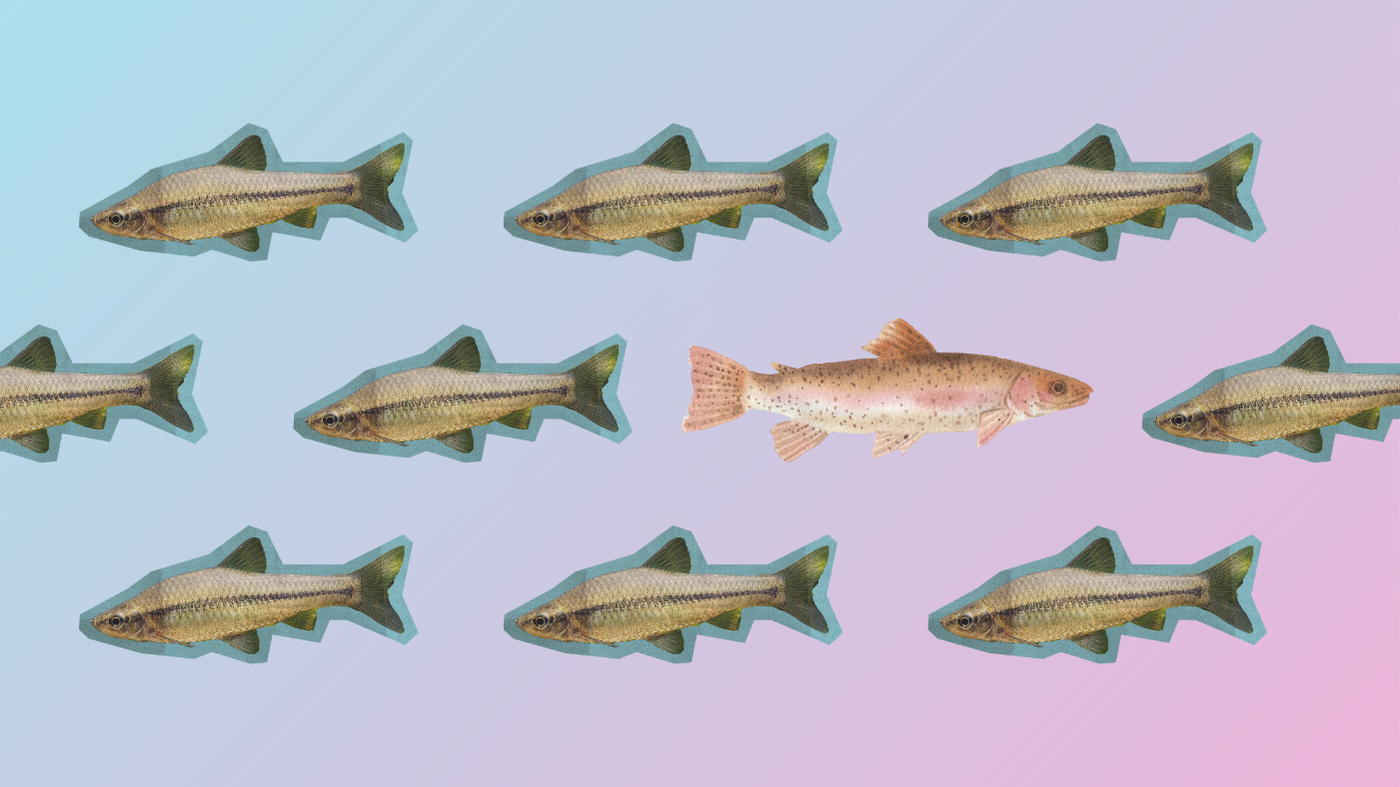
You already know the moment. A thought lands in the room that doesn’t quite behave. It doesn’t fit the template. It doesn’t neatly map to what everyone expected. Someone grins. Someone pauses. Someone says, “Interesting… but will it work?”
That hesitation is the tell. That’s usually the idea with oxygen in it.
But here’s the part nobody romanticises: weird ideas are easy to have. They’re ten-a-penny. You can sketch them in a rush of caffeine and confidence. Execution is the brutal filter. Execution is where most of them die.
Not because they were wrong. Because they were mishandled.
Execution doesn’t start in Figma
Most people think execution begins with the build. The craft. The detail. The deadlines.
It doesn’t. It starts with clarity. With decisions.
A strange idea only survives if the strategy underneath it is clear enough to protect it. You need to know:
- who this is for
- what it needs to change in someone’s head
- what it’s allowed to break
- and what it absolutely can’t dilute
Without that, weird becomes fragile. Everyone edits it from a different angle. The edges soften. The intent blurs. The idea survives just long enough to become “interesting, but compromised.”
Clear strategy doesn’t tame weird. It gives it a spine.
Let the discomfort do its job
Expect a phase where the idea feels awkward. Not broken. Not wrong. Just unfamiliar in a way that makes you second-guess yourself. That moment matters.
Safe work almost never creates it. Competent work drifts past it untouched. But work that actually shifts something has to pass through that zone of quiet unease where the outcome isn’t fully visible yet.
That’s the point you either:
- retreat into what you already know works
- or lean into what might work better
If you want different results, you can’t always choose the comfortable feeling.
We’ve had projects where the middle was deeply unsettling. Where the thing looked too ambitious, too unlike anything the sector was used to. The temptation to “just make it simpler” was loud. Every time that voice wins too early, the weird dies politely.
The good stuff only arrives if you stay in the discomfort long enough for the logic to catch up with the instinct.
Turn weird into inevitable through craft
Watch what happens when execution does its job properly. The idea stops feeling novel and starts feeling necessary. What once felt like a risk begins to feel like the only honest option.
That shift doesn’t come from energy alone. It comes from precision:
- Choose the type that carries the tone rather than decorating it.
- Use motion where it sharpens meaning, not where it fills silence.
- Control pacing so the idea reveals itself instead of blurting everything at once.
- Cut anything that steals focus from the core decision.
Weird earns authority through restraint.
Execution isn’t the polish at the end. It’s the discipline that makes the idea legible in the first place.
We’ve watched this happen when a strange, cinematic website idea finally landed with enough precision that it stopped feeling experimental and started feeling like the only honest way the brand could exist online.
Strategy is what keeps weird from collapsing under pressure
Real weird ideas don’t just meet designers. They meet marketing, sales, performance targets, investor decks, legal reviews. And that’s where weak ideas fall apart.
Strategy is what lets a strange idea hold its shape when it’s squeezed by reality. It gives you the language to defend it. The logic to protect it. The clarity to say no when someone tries to neutralise it in the name of “safety”.
Without strategy, weird is decoration. With strategy, weird becomes position.
We felt this first-hand on the Universal Production Partners site.
The original idea wasn’t “make a nice VFX portfolio.” It was stranger than that. A cinematic, spatial website that behaved more like a portal into their world than a conventional homepage. Time of day shifting. Game-like movement. Atmosphere. A site that felt like the worlds they build for film rather than a tidy brochure about them.
On paper, it was risky. It was harder to sell internally. Harder to cost. Harder to benchmark against competitors doing perfectly respectable grid-based sites with showreels at the top.
There were moments when it would have been much easier to simplify it. Make it more “normal”. Pull it back toward what that sector already expects. What stopped it collapsing was strategy.
UPP didn’t want to look like another VFX supplier. They wanted to be perceived as a world-builder. A studio that doesn’t just execute shots, but creates cinematic environments from nothing. Once that positioning was locked, the weird idea stopped being optional. It became necessary.
The execution followed the intent instead of diluting it.
Now, the site doesn’t just show their work. It behaves like it.
That’s the moment when weird stops feeling indulgent and starts feeling inevitable.
Cut through the age of “fine”
Templates have flattened the internet. Tools have sped everything up. Trends have made everyone reference the same visual handful of ideas at the same time.
Most of what you scroll past now isn’t bad, it’s just interchangeable.
Weird-with-intent still cuts through because it resists averaging. It feels authored. You sense a real decision behind it. You sense something being chosen, not assembled.
That feeling is rare. Which is exactly why it works.
Final thought
Looking back, the work that stays with you probably isn’t the safest stuff you shipped. It’s the projects that asked more of you. The ideas that felt odd too early and obvious too late. The ones that needed conviction as much as skill.
Protect the strange idea, anchor it in strategy, and execute it with care.
That’s when weird stops being fragile and starts becoming undeniable.
That’s where the joy actually lives.
We call it design with guts. You might just call it caring enough to see a strange idea all the way through. Either way, it’s the part of the job that still makes us grin when it lands.
Here’s to more weird ideas well executed in 2026!
About KOTA
KOTA is a global branding agency and creative web design studio. Our brand-to-build approach brings strategy, identity, creative web design, development and growth marketing into one connected process. We help ambitious businesses find brand clarity, turn it into creatively confident work and build digital systems that create commercial momentum.




Interested in working with KOTA?
Drop us a line at
hello@kota.co.uk
We are a Creative Digital Agency based in Clerkenwell London, specialising in Creative Web Design, Web Development, Branding and Digital Marketing.